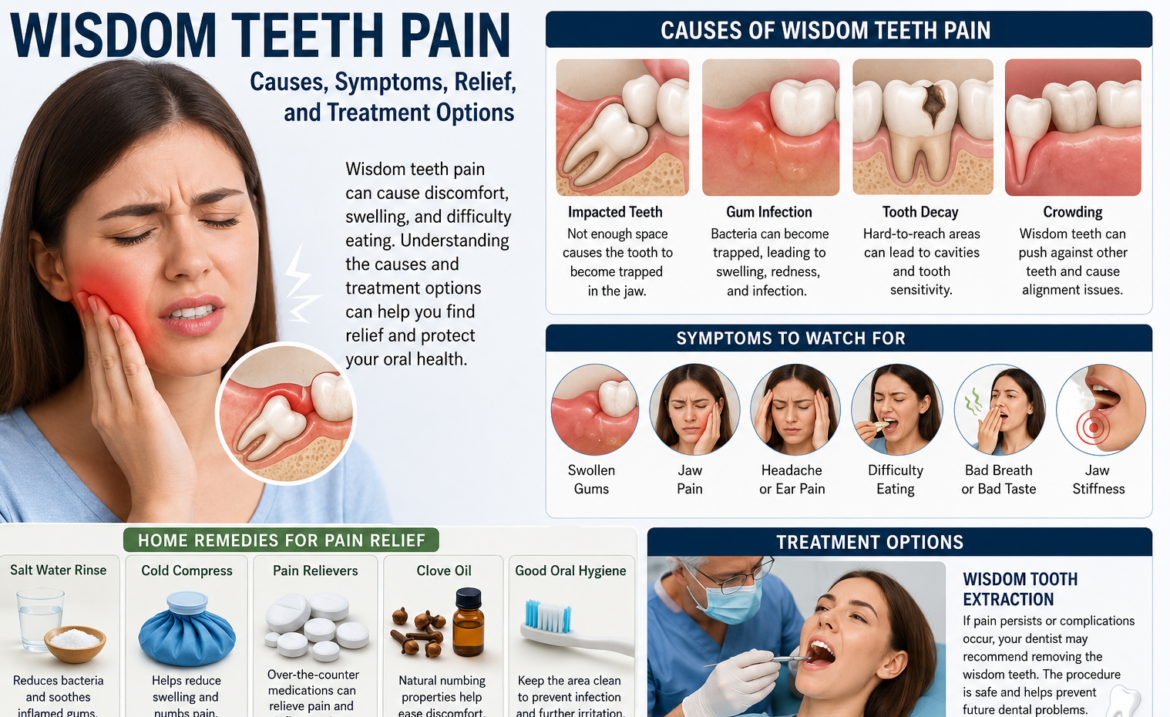
Wisdom teeth pain can be uncomfortable, frustrating, and sometimes severe enough to affect daily life. Many people experience wisdom teeth pain during their late teens or early twenties when these third molars begin to emerge. In some cases, wisdom teeth grow normally, but for many individuals, they become impacted or infected, causing swelling, jaw discomfort, and difficulty eating.
Understanding the causes of wisdom teeth pain and learning how to manage the symptoms can help prevent serious dental complications. This guide explains everything you need to know about wisdom teeth pain, including symptoms, treatment methods, recovery tips, and prevention strategies.
What Are Wisdom Teeth?
Wisdom teeth are the third set of molars located at the back corners of the mouth. Most people develop four wisdom teeth, although some may have fewer or none at all. These teeth usually appear between the ages of 17 and 25.
In ancient times, wisdom teeth were useful for chewing rough foods. Today, human jaws are generally smaller, leaving less space for these extra molars. As a result, wisdom teeth often grow improperly or become trapped under the gums.
Common Causes of Wisdom Teeth Pain
Impacted Wisdom Teeth
One of the most common causes of wisdom teeth pain is impaction. An impacted tooth does not fully emerge because there is not enough space in the jaw.
Impacted wisdom teeth may:
- Grow sideways
- Push against nearby teeth
- Remain trapped under the gums
- Partially erupt through the gum tissue
This condition often causes pain, swelling, and pressure in the jaw.
Gum Infection Around Wisdom Teeth
Partially erupted wisdom teeth create spaces where food particles and bacteria can become trapped. This may lead to gum infections known as pericoronitis.
Symptoms often include:
- Red or swollen gums
- Bad breath
- Difficulty chewing
- Pus near the tooth
- Pain while opening the mouth
Tooth Decay
Wisdom teeth are difficult to clean properly because of their position at the back of the mouth. Poor cleaning can lead to cavities and bacterial buildup, which may trigger wisdom teeth pain.
Pressure on Nearby Teeth
When wisdom teeth push against surrounding molars, they can cause crowding and discomfort. This pressure may also affect dental alignment.
Cysts and Damage to the Jaw
In rare cases, impacted wisdom teeth may form cysts. These fluid-filled sacs can damage surrounding bone, nerves, and teeth if left untreated.
Symptoms of Wisdom Teeth Pain
Mild to Severe Jaw Pain
Pain near the back of the mouth is one of the earliest signs of wisdom tooth problems. The discomfort may come and go or become constant over time.
Swollen Gums
Swelling around the wisdom tooth area often indicates irritation or infection.
Headaches and Ear Pain
Wisdom teeth pain can radiate through the jaw and facial muscles, leading to headaches or discomfort near the ears.
Difficulty Eating
Chewing food may become painful, especially when the gums are inflamed.
Bad Breath and Unpleasant Taste
Infections around wisdom teeth may cause bad breath and a persistent unpleasant taste in the mouth.
Jaw Stiffness
Some people experience difficulty opening their mouths fully because of swelling and pressure.
How to Relieve Wisdom Teeth Pain at Home
Salt Water Rinse
A warm salt water rinse helps reduce bacteria and soothe inflamed gums.
How to use it:
- Mix half a teaspoon of salt into warm water
- Swish for 30 seconds
- Repeat several times daily
Cold Compress
Applying a cold compress to the outside of the jaw can help reduce swelling and numb the pain.
Over-the-Counter Pain Relievers
Pain medications such as ibuprofen may temporarily reduce inflammation and discomfort.
Clove Oil
Clove oil contains natural numbing properties that may help ease wisdom teeth pain.
Maintain Good Oral Hygiene
Keeping the mouth clean is important for preventing infection. Gently brush and floss around the affected area.
When Wisdom Teeth Pain Becomes Serious
Signs You Should See a Dentist
Seek professional dental care if you experience:
- Severe swelling
- Fever
- Difficulty swallowing
- Persistent bleeding
- Intense pain lasting several days
- Pus around the gums
These symptoms may indicate a serious infection that requires immediate treatment.
Diagnosis of Wisdom Teeth Problems
Dentists usually examine wisdom teeth using:
- Oral examinations
- Dental X-rays
- Digital imaging
These methods help determine whether the wisdom teeth are impacted or causing damage to nearby structures.
Wisdom Teeth Removal Procedure
Why Removal Is Necessary
Dentists often recommend extraction when wisdom teeth:
- Cause recurring pain
- Lead to infections
- Damage nearby teeth
- Create crowding
- Develop cysts
The Extraction Process
Wisdom tooth extraction is a common dental procedure. Depending on the complexity, the dentist or oral surgeon may:
- Use local anesthesia
- Provide sedation
- Remove bone covering the tooth
- Extract the tooth in sections
The procedure usually takes less than an hour.
Recovery After Wisdom Teeth Removal
First 24 Hours
After surgery, patients should:
- Rest
- Avoid strenuous activity
- Bite gently on gauze
- Avoid smoking or drinking through straws
Foods to Eat During Recovery
Soft foods are recommended during healing, including:
- Yogurt
- Mashed potatoes
- Soup
- Smoothies
- Applesauce
Managing Swelling and Pain
Applying ice packs and taking prescribed medications can improve comfort during recovery.
Healing Time
Most people recover within one to two weeks, although complete healing may take longer.
Can Wisdom Teeth Pain Go Away on Its Own?
In some cases, mild wisdom teeth pain may disappear temporarily if the tooth fully erupts without complications. However, recurring pain often signals an underlying problem that should not be ignored.
Delaying treatment can increase the risk of infection and damage to surrounding teeth.
Preventing Wisdom Teeth Problems
Regular Dental Checkups
Routine dental visits help identify wisdom tooth issues early before complications develop.
Proper Oral Hygiene
Brushing twice daily and flossing carefully around wisdom teeth can reduce bacterial buildup.
Early Monitoring
Dentists often monitor wisdom teeth during teenage years to determine whether removal may eventually be needed.
Myths About Wisdom Teeth Pain
“Everyone Must Remove Wisdom Teeth”
Not everyone needs wisdom tooth extraction. Some wisdom teeth grow normally and remain healthy.
“Pain Means Immediate Surgery”
Mild discomfort does not always require immediate removal. A dentist can evaluate the severity of the condition.
“Wisdom Teeth Always Cause Crowding”
Research on this topic remains mixed. Crowding may occur in some cases but not all.
Long-Term Effects of Ignoring Wisdom Teeth Pain
Untreated wisdom teeth problems may lead to:
- Chronic infections
- Gum disease
- Tooth decay
- Jaw damage
- Misalignment of nearby teeth
Early treatment helps avoid more serious complications later.
Natural Remedies for Wisdom Teeth Pain
Peppermint Tea Bags
Cool peppermint tea bags may soothe irritated gums.
Aloe Vera Gel
Aloe vera has anti-inflammatory properties that may calm gum irritation.
Turmeric Paste
Turmeric contains natural antibacterial compounds that may help reduce inflammation.
These remedies may provide temporary relief but should not replace professional dental care.
How long does wisdom teeth pain last?
Wisdom teeth pain may last a few days or several weeks depending on the cause and severity of the issue.
Can wisdom teeth pain cause headaches?
Yes, wisdom teeth pain can radiate through the jaw and facial muscles, causing headaches and ear discomfort.
Is wisdom tooth removal painful?
The procedure itself is usually painless because anesthesia is used. Mild soreness after surgery is normal.
What is the fastest way to relieve wisdom teeth pain?
Cold compresses, salt water rinses, and anti-inflammatory medications often provide temporary relief.
Can infected wisdom teeth heal without treatment?
Minor irritation may improve temporarily, but serious infections usually require professional dental care.
Final Thoughts on Wisdom Teeth Pain
Wisdom teeth pain is a common dental issue that affects millions of people worldwide. While mild discomfort may sometimes resolve on its own, persistent pain often indicates impaction, infection, or other complications that require attention.
Understanding the symptoms and treatment options for wisdom teeth pain can help you make informed decisions about your oral health. Regular dental checkups, proper hygiene, and early treatment remain the best ways to prevent long-term problems.
If wisdom teeth pain becomes severe or persistent, consulting a dental professional is the safest step toward lasting relief.