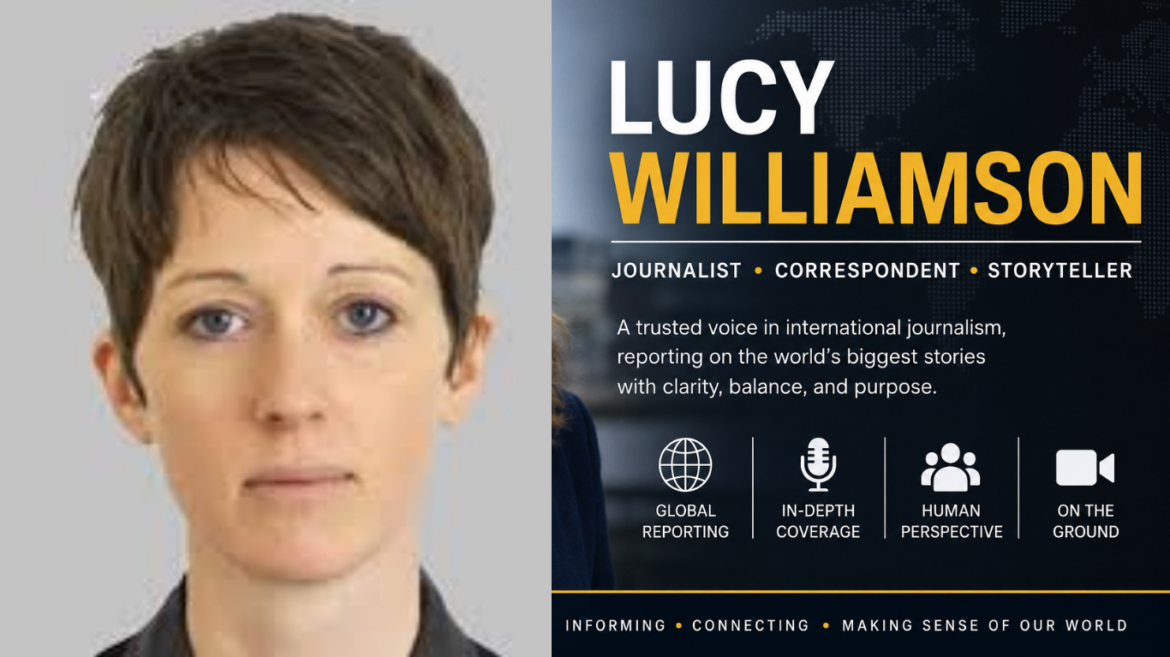
Lucy Williamson is widely recognized as a professional journalist known for her international reporting and in-depth coverage of global events. Over the years, she has developed a reputation for delivering clear, balanced, and informative news stories that help audiences understand complex world affairs.
In modern journalism, correspondents play an important role in connecting global events with everyday viewers. Lucy Williamson is often associated with this role, bringing clarity, context, and human perspective to the stories she covers. Her work reflects the standards of international reporting, where accuracy, fairness, and storytelling come together.
This article explores her professional journey, reporting style, contributions to journalism, and the broader importance of her role in global media.
Early Life and Educational Background
Like many journalists, Lucy Williamson’s career is rooted in curiosity about people, cultures, and world events. Although detailed personal information about her early life is limited in public records, her professional path reflects strong communication skills and a deep interest in global affairs.
Education is often a key foundation for journalists working in international media. Subjects such as politics, history, languages, and communication studies help build the analytical thinking required for reporting complex issues.
Skills Developed During Early Academic Life
To succeed in journalism, especially at an international level, certain skills are essential:
Research and Analysis
Understanding facts, verifying sources, and analyzing information are critical for accurate reporting.
Communication
Journalists must present information clearly so audiences can easily understand complex situations.
Cultural Awareness
International reporters need sensitivity toward different traditions, values, and social systems.
Critical Thinking
The ability to question information and understand multiple perspectives is essential in journalism.
These foundational skills often shape a journalist’s ability to handle real-world reporting challenges later in their career.
Beginning of a Journalism Career
Lucy Williamson’s career path reflects the typical progression of many broadcast journalists. Most professionals begin with smaller reporting roles before moving into larger, international assignments.
Early journalism experience often includes working on local stories, assisting senior reporters, and learning how to operate in fast-paced newsroom environments. These experiences build confidence and help journalists understand how news production works from start to finish.
Core Early Responsibilities in Journalism
Field Reporting
Visiting locations, interviewing people, and gathering firsthand information.
News Writing
Structuring reports in a way that is clear, factual, and engaging.
Broadcasting Skills
Learning to present stories in front of a camera or microphone with professionalism and clarity.
Over time, consistent performance and strong storytelling abilities can lead journalists into more prominent roles, including international correspondence.
International Reporting Career
Lucy Williamson is best known for her work in international journalism, where she has covered major global developments and reported from different regions of the world. International correspondents are often responsible for explaining complex political, social, and humanitarian issues to a global audience.
This type of journalism requires not only reporting skills but also adaptability and a deep understanding of global affairs.
Key Areas of International Coverage
Political Events
Political reporting involves covering elections, government decisions, and international relations. These stories often shape global conversations and influence public opinion.
Humanitarian Stories
Many international journalists focus on human-centered reporting, highlighting how global events affect individuals and communities.
Conflict and Crisis Reporting
Some assignments may involve covering unstable regions or crises, requiring careful reporting and strong ethical awareness.
Cultural and Social Issues
Understanding cultural differences helps journalists explain events in a way that respects local perspectives.
Through her reporting work, Lucy Williamson has contributed to making international news more accessible and understandable for viewers.
Reporting Style and Professional Approach
A journalist’s style is defined by how they present information, interpret events, and connect with audiences. Lucy Williamson is often associated with a reporting style that emphasizes clarity, balance, and context.
Key Elements of Her Journalism Style
Clear and Simple Communication
She focuses on explaining complex global events in straightforward language that audiences can easily follow.
Contextual Reporting
Rather than reporting isolated facts, she provides background information that helps viewers understand why events are happening.
Human Perspective
Her reporting often highlights personal stories, helping audiences connect emotionally with global issues.
Balanced Presentation
Fairness and objectivity are essential in journalism, and balanced reporting ensures credibility and trust.
These qualities are important for journalists working in international news, where accuracy and clarity are essential.
Challenges Faced by International Journalists
Working as an international correspondent is both rewarding and demanding. While it offers opportunities to travel and report on major events, it also comes with significant challenges.
Pressure and Deadlines
Breaking news often requires journalists to report quickly while maintaining accuracy. This creates high-pressure working conditions.
Safety Concerns
Some assignments may take journalists into regions experiencing political unrest or conflict, requiring careful risk management.
Emotional Strain
Reporting on human suffering, disasters, or crises can have a strong emotional impact on journalists.
Constant Adaptation
Each country or region presents different languages, cultures, and working environments, requiring flexibility and quick learning.
Despite these challenges, international journalists continue their work because of the importance of informing the public.
Importance of Journalism in Today’s World
In an era of constant information flow, journalism plays a vital role in shaping public understanding of global events. With so much information available online, accurate and responsible reporting has become more important than ever.
Key Roles of Journalism
Informing the Public
News organizations provide updates about events happening around the world.
Ensuring Accountability
Journalists help hold governments and institutions accountable by investigating important issues.
Providing Context
Good journalism explains not only what is happening, but also why it matters.
Combating Misinformation
Verified reporting helps reduce confusion and spread accurate information.
Lucy Williamson’s work contributes to these broader goals by helping audiences understand international developments more clearly.
Influence on Modern Journalism
Experienced journalists often influence the next generation of reporters. Their work serves as a model for professionalism, ethics, and storytelling techniques.
Lucy Williamson’s reporting style demonstrates several important lessons for aspiring journalists:
- Always prioritize accuracy over speed
- Maintain objectivity and fairness
- Understand cultural and political context
- Focus on human stories behind global events
- Communicate complex ideas in simple language
These principles remain central to strong journalism in any era.
Continuing Role in Global Media
As the media landscape continues to evolve with digital platforms and changing audience habits, the role of journalists remains essential. Viewers today consume news through television, online platforms, and mobile devices, making clarity and trust even more important.
Journalists like Lucy Williamson continue to represent the importance of reliable reporting in a fast-changing world. Their work helps bridge the gap between global events and public understanding.
1. Who is Lucy Williamson?
Lucy Williamson is a professional journalist known for her work in international reporting. She has built her reputation by covering global news stories and presenting them in a clear, balanced, and informative way for television audiences.
2. What type of journalism does Lucy Williamson do?
She mainly works in broadcast and international journalism. Her reporting focuses on political events, global affairs, humanitarian issues, and stories that help audiences understand complex situations around the world.
3. Why is Lucy Williamson well-known in journalism?
She is well-known for her ability to explain complicated international events in a simple and engaging way. Her reporting style emphasizes clarity, context, and human perspective, which makes global news easier to understand.
4. What makes international journalism challenging?
International journalism is challenging because it often involves tight deadlines, working in different cultural environments, and sometimes reporting from areas affected by conflict or crisis. Journalists must also ensure accuracy while working under pressure.
5. What impact do journalists like Lucy Williamson have?
Journalists like Lucy Williamson play an important role in informing the public, providing context for world events, and helping reduce misinformation. Their work helps audiences stay aware of global developments and understand how they affect society.
Conclusion
Lucy Williamson’s career reflects the dedication, skill, and responsibility required in international journalism. Through her reporting, she has contributed to explaining global events in a way that is accessible, balanced, and meaningful.
Her work highlights the importance of journalism in today’s society—where accurate information, human storytelling, and global awareness are more valuable than ever.
International correspondents play a key role in shaping how people understand the world, and Lucy Williamson stands as an example of professionalism in this field.