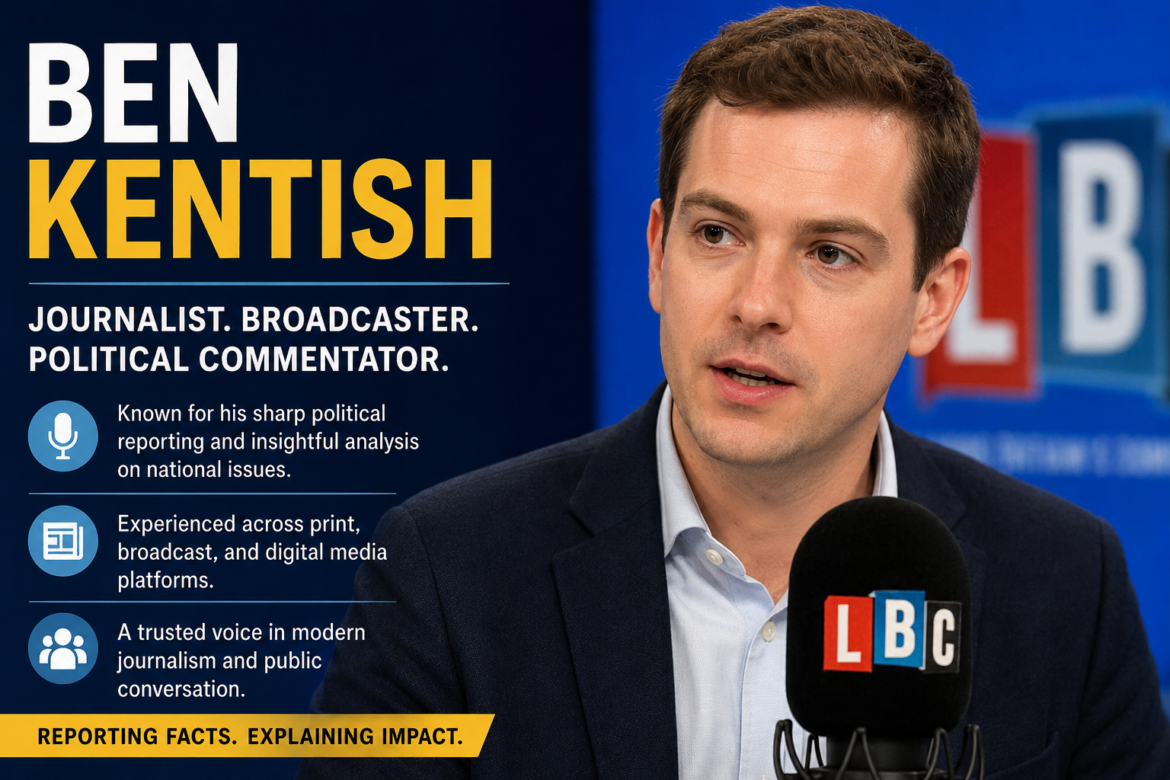
In today’s fast-moving media landscape, journalists play a crucial role in shaping public understanding of politics, current affairs, and global events. One emerging and recognizable voice in modern British journalism is Ben Kentish. Known for his political reporting, broadcasting presence, and commentary on important national issues, Ben Kentish has gradually built a reputation as a respected journalist in the United Kingdom.
As media consumption evolves from traditional television and newspapers to digital platforms and live broadcasts, figures like Ben Kentish represent a newer generation of reporters who combine traditional journalism values with modern communication methods. His work reflects a commitment to reporting facts while making complex stories understandable for audiences.
This article explores Ben Kentish’s background, career journey, journalism style, achievements, and impact on modern media.
Who Is Ben Kentish?
Ben Kentish is a British journalist and broadcaster recognized primarily for his work in political reporting and radio journalism. Over time, he has become associated with insightful discussions on national affairs, politics, policy developments, and public debates.
Like many modern journalists, his work extends beyond one medium. Rather than being confined solely to newspapers or television, Ben has contributed across multiple broadcasting channels and digital platforms.
His growing visibility comes from consistent reporting and a professional style that prioritizes clarity and balanced discussion.
Early Life and Educational Background
While extensive public details about Ben Kentish’s early personal life remain limited, many journalists follow a path shaped by academic interest in communication, politics, and current affairs.
Like numerous media professionals in Britain, developing an understanding of government systems, public policy, and social issues often serves as a foundation for journalism careers.
Strong educational backgrounds can significantly influence reporting styles because journalists covering politics require:
- Research abilities
- Critical thinking skills
- Interview techniques
- Communication expertise
- Analytical writing capabilities
These elements often become essential in building a successful media career.
Beginning a Career in Journalism
The journalism industry is highly competitive. Reporters usually start by gaining experience in local newsrooms, internships, smaller media organizations, or editorial positions before progressing into national reporting roles.
Ben Kentish’s rise reflects this broader reality within media.
Building a reputation in journalism rarely happens overnight. Instead, it involves:
Developing Reporting Skills
Journalists must learn how to:
- Verify facts
- Analyze sources
- Conduct interviews
- Report under deadlines
- Deliver accurate information quickly
Understanding Political Landscapes
Political journalism requires extensive understanding of:
- Government institutions
- Elections
- Public policy
- International affairs
- Economic issues
Strong political understanding often separates general reporters from specialists.
Building Public Trust
Modern audiences value credibility. Trust is earned gradually through consistency and responsible reporting.
Ben Kentish’s professional development appears rooted in these principles.
Ben Kentish and Political Journalism
Political journalism remains one of the most demanding areas in media. Reporters covering politics face pressure to remain informed while maintaining objectivity and accuracy.
Ben Kentish became increasingly recognized for political reporting and analysis involving key national conversations.
Areas political journalists commonly cover include:
Government Policy
Political correspondents frequently analyze:
- Legislative changes
- Economic decisions
- Public service reforms
- Government announcements
Their role extends beyond repeating information; they explain implications for everyday people.
Election Coverage
Election reporting requires:
- Candidate analysis
- Poll interpretation
- Live reporting
- Debate coverage
- Public reaction assessment
Political journalists become especially visible during election cycles.
Breaking News Events
Fast-moving political situations demand immediate and accurate updates.
Reporters covering live events must balance speed with factual accuracy.
Ben Kentish’s reporting style often reflects this balance.
Broadcasting and Radio Presence
Modern journalism increasingly overlaps with broadcasting. Radio and live media remain powerful channels for political discussions and audience engagement.
Ben Kentish has become known not only through written journalism but also through broadcasting appearances.
Broadcast journalism requires additional skills beyond writing.
These include:
Verbal Communication
Radio journalists must explain complicated topics clearly.
Audiences listening during commutes or daily routines need concise explanations.
Live Interviewing
Live conversations can be unpredictable.
Journalists need to:
- Ask strong questions
- Respond quickly
- Manage discussions professionally
Audience Engagement
Broadcast journalism creates immediate interaction with listeners.
Public engagement strengthens journalistic visibility and influence.
Journalism Style and Approach
Every journalist develops an individual reporting style.
Some emphasize investigation.
Others prioritize commentary.
Some focus on storytelling.
Ben Kentish’s approach appears centered around accessibility and informed discussion.
Characteristics associated with effective journalism include:
Clarity
Complicated political matters can confuse audiences.
Strong journalists simplify information without oversimplifying facts.
Balance
Political reporting often requires presenting multiple perspectives fairly.
Balance strengthens credibility.
Context
Facts alone do not always tell complete stories.
Context helps audiences understand why events matter.
This combination improves audience understanding and trust.
The Changing Media Environment
Journalism today differs significantly from previous decades.
Digital transformation reshaped how audiences consume information.
Traditional media once relied primarily on:
- Newspapers
- Scheduled television programs
- Radio broadcasts
Today audiences increasingly access:
- Social media updates
- Podcasts
- online publications
- live streams
- mobile news alerts
Journalists now work across multiple platforms simultaneously.
Ben Kentish belongs to a generation of media professionals adapting to this changing environment.
Challenges Facing Modern Journalists
Media professionals operate within an increasingly difficult environment.
Challenges include:
Information Overload
Audiences receive massive amounts of information daily.
Separating reliable reporting from misinformation has become harder.
Speed Pressures
News organizations compete to deliver stories first.
However, speed should never replace accuracy.
Public Skepticism
Trust in media institutions fluctuates.
Journalists continually face scrutiny from audiences and public figures.
Social Media Influence
Platforms can rapidly spread both accurate and misleading information.
Journalists now participate in digital conversations while maintaining professional standards.
These pressures shape the work of contemporary reporters.
Public Recognition and Professional Reputation
In journalism, reputation matters enormously.
Unlike entertainment industries where popularity alone may drive success, journalists rely heavily on credibility.
Professional reputation develops through:
- Consistent reporting
- Reliable information
- Ethical standards
- Strong analysis
- audience trust
Ben Kentish’s growing profile suggests increasing recognition within political and broadcasting circles.
As visibility expands, journalists often become influential voices in public discussion.
Influence on Public Conversation
Media figures contribute significantly to democratic societies.
Journalists do more than report events.
They help citizens understand:
- Government actions
- political debates
- social issues
- economic developments
- global events
Political reporting especially shapes public awareness.
Ben Kentish’s role within broadcasting and journalism contributes to these wider discussions.
The ability to translate complex issues into understandable reporting strengthens public participation.
Why Journalism Still Matters
The digital era transformed media but did not reduce journalism’s importance.
Reliable reporting remains essential because societies depend on informed citizens.
Quality journalism:
- encourages accountability
- explains public issues
- investigates important topics
- supports democratic discussion
- challenges misinformation
Journalists continue serving an important role despite changing technology.
Figures like Ben Kentish represent evolving forms of media professionalism adapted to modern audiences.
Who is Ben Kentish?
Ben Kentish is a British journalist and broadcaster known for political reporting and commentary on public affairs.
What type of journalism does Ben Kentish focus on?
He is primarily associated with political journalism, broadcasting, and analysis of current events.
Why is Ben Kentish becoming well known?
His visibility has increased through political reporting, broadcasting appearances, and discussions involving national issues.
Does Ben Kentish work only in print journalism?
No. Like many modern journalists, his work extends across broadcasting and digital media platforms.
Why are political journalists important?
Political journalists help explain government actions, elections, policy changes, and public issues to wider audiences.
Conclusion
Ben Kentish has emerged as a recognizable journalist and broadcaster through political reporting, public discussion, and media engagement. His work reflects qualities increasingly valued in contemporary journalism: clarity, communication skills, and the ability to navigate a rapidly changing information environment.
As journalism evolves alongside digital technology, professionals must adapt to new platforms and audience expectations. Ben Kentish appears part of this new generation of media figures balancing traditional reporting principles with modern broadcasting demands.
Whether through political coverage, live broadcasting, or public commentary, his contributions demonstrate how journalism continues shaping conversations and helping audiences understand the world around them.