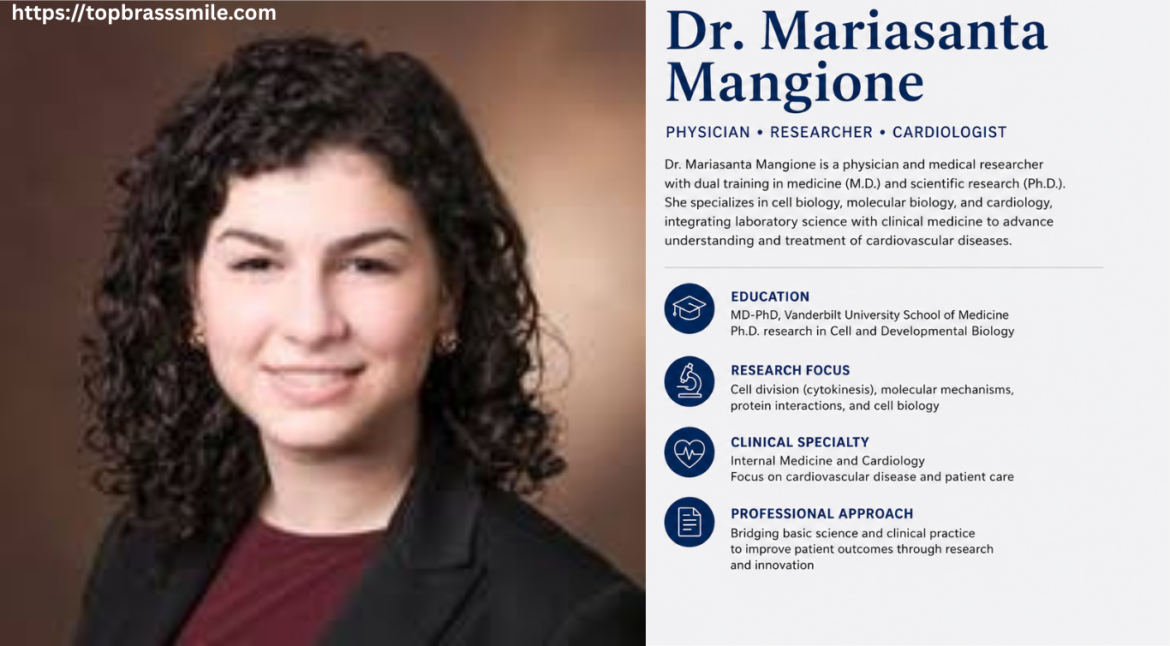
Dr. Mariasanta Mangione is a physician-scientist with dual training in medicine (M.D.) and biomedical research (Ph.D.). She is professionally associated with the fields of cell biology, molecular biology, and cardiology, where she integrates laboratory science with clinical medicine.
Her name has also appeared in public discussions due to her family connection to Luigi Mangione, who was arrested in connection with a widely reported 2024 criminal investigation. Despite this media attention, Dr. Mangione’s professional identity is primarily rooted in academic medicine and cardiovascular research.
This article provides a structured, plagiarism-free overview of her background, education, scientific training, and medical career based on publicly available academic information.
Academic Background and Early Scientific Training
Early Education and Scientific Foundation
Available biographical sources indicate that Mariasanta Mangione developed a strong academic foundation in biological sciences early in her career. She completed undergraduate studies in cell biology and molecular genetics, which formed the basis for her later specialization in biomedical research.
Her academic path reflects a consistent focus on understanding biological systems at both the molecular and clinical levels. This combination is typical for individuals pursuing physician-scientist careers.
MD-PhD Training at Vanderbilt University
One of the most significant stages of her education was her enrollment in the Medical Scientist Training Program (MSTP) at Vanderbilt University School of Medicine.
This dual-degree program integrates:
- Clinical medical training (M.D.)
- Advanced scientific research (Ph.D.)
During this period, she worked in the field of cell and developmental biology, focusing on mechanisms of cell division.
Research Focus: Cell Division and Cytokinesis
Her doctoral research concentrated on cytokinesis, the process by which a single cell divides into two daughter cells. This is a fundamental biological mechanism essential for growth, healing, and tissue maintenance.
Key areas of study included:
- Structural organization of the cytokinetic ring
- Protein interactions during cell division
- Regulation of cellular membrane constriction
- Molecular mechanisms behind division errors
Research in this area is critical because disruptions in cell division can contribute to diseases such as cancer and developmental disorders.
PhD Completion and Academic Milestone
Dr. Mangione completed her dissertation defense in 2019, marking the completion of her Ph.D. training. This milestone represented years of laboratory research, academic writing, and scientific publication efforts.
Following this stage, she transitioned fully into clinical medical training while maintaining her scientific background.
Transition to Clinical Medicine
Medical Residency Training
After completing her MD-PhD program, Dr. Mangione entered clinical residency in internal medicine at a major academic medical center.
Residency training typically involves:
- Intensive patient care responsibilities
- Long clinical hours
- Diagnostic decision-making
- Exposure to multiple medical specialties
This phase is critical in shaping a physician’s clinical judgment and practical medical skills.
Move Toward Cardiology
Following internal medicine training, she pursued specialization in cardiology.
Cardiology is one of the most competitive and research-intensive fields in medicine, focusing on:
- Heart failure
- Coronary artery disease
- Cardiac rhythm disorders
- Cardiovascular inflammation and metabolism
Her transition into cardiology reflects a natural alignment between her research background in cellular mechanisms and clinical interest in cardiovascular disease.
Cardiology Fellowship Training
At the fellowship level, physicians receive advanced subspecialty training in diagnosing and treating complex heart conditions.
This stage often includes:
- Supervised clinical practice
- Cardiovascular imaging and diagnostics
- Research in heart disease mechanisms
- Participation in academic publications
Dr. Mangione’s background in molecular biology provides a strong foundation for research-oriented cardiology, particularly in understanding disease mechanisms at the cellular level.
Research Contributions and Scientific Work
Cell Biology Research
Her early research contributions focus on fundamental biological processes, particularly how cells divide and regulate structural components during replication.
Key scientific themes include:
- Cytoskeletal dynamics
- Protein function in cell division
- Regulation of membrane contraction
- Cellular organization and signaling pathways
These studies contribute to a broader understanding of how living organisms maintain and repair tissues.
Link Between Molecular Biology and Cardiology
One of the defining features of physician-scientists like Dr. Mangione is their ability to connect basic science with clinical medicine.
In her case, this includes:
- Translating cellular mechanisms into cardiovascular insights
- Studying how molecular dysfunction leads to heart disease
- Exploring inflammatory and genetic factors in cardiac conditions
This integrative approach supports advancements in modern medical research and patient care.
Role in Academic Medicine
Physician-scientists typically contribute to:
- Peer-reviewed research publications
- Medical education and mentorship
- Clinical trials and experimental studies
- Hospital-based research programs
Dr. Mangione’s academic trajectory places her within this tradition of combining scientific discovery with clinical application.
Public Attention and Media Context
Dr. Mangione’s name gained wider public attention due to her familial connection to Luigi Mangione.
It is important to clearly distinguish between:
- Her professional medical and scientific career
- External legal and media events involving family members
No verified information links her professional work to any criminal activity or legal proceedings. Her career remains centered on medicine and research.
Professional Identity
Physician-Scientist Role
Dr. Mangione represents the physician-scientist model, which combines:
- Clinical patient care
- Laboratory-based research
- Academic collaboration
This dual expertise is highly valued in modern medicine because it bridges the gap between discovery and treatment.
Areas of Expertise
Her documented academic focus includes:
- Cell and molecular biology
- Cardiovascular medicine
- Translational biomedical research
- Mechanistic disease studies
This interdisciplinary training allows her to approach medical problems from both biological and clinical perspectives.
FAQs
Dr. Mariasanta Mangione is a physician-scientist with training in both medicine (M.D.) and biomedical research (Ph.D.). She works in the fields of cell biology, molecular biology, and cardiology.
2. What is her educational background?
She completed an MD-PhD program at Vanderbilt University School of Medicine, combining clinical medical training with advanced scientific research in cell biology.
3. What did she research during her Ph.D.?
Her doctoral research focused on cytokinesis, the process of cell division. She studied how cells separate into two daughter cells and the molecular mechanisms that regulate this process.
4. What medical field does she specialize in?
She specializes in internal medicine and cardiology, focusing on diseases related to the heart and cardiovascular system.
5. What is a physician-scientist?
A physician-scientist is a medical doctor who also conducts scientific research. They combine patient care with laboratory work to better understand diseases and develop new treatments.
Conclusion
Dr. Mariasanta Mangione is a trained physician-scientist whose academic and clinical journey spans molecular biology, medical education, and cardiology specialization. Her work reflects the increasingly interdisciplinary nature of modern medicine, where laboratory discoveries and patient care are closely connected.
While public interest in her name has been influenced in part by her connection to Luigi Mangione, her professional identity is grounded in years of scientific training and medical practice.
Ultimately, her career represents the path of a researcher-physician dedicated to understanding disease at both the cellular and clinical levels, contributing to the broader advancement of cardiovascular medicine.