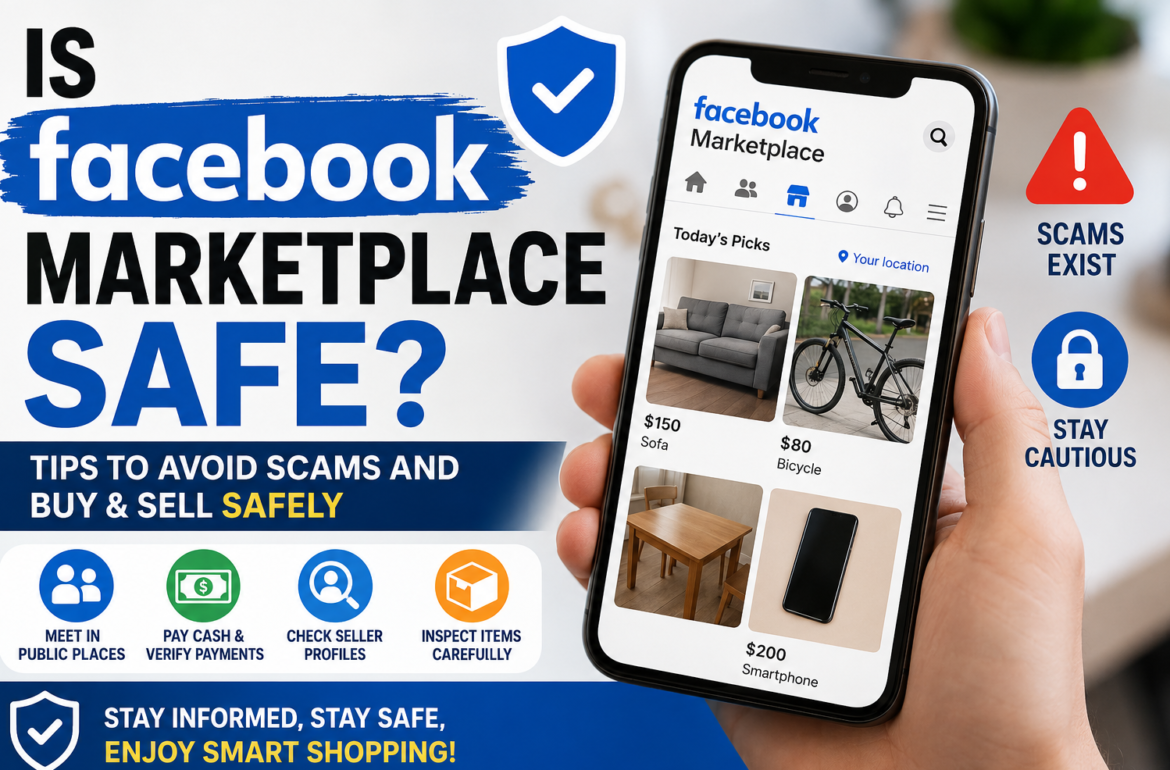
Facebook Marketplace has become one of the most popular places for people to buy and sell products locally. From used furniture and smartphones to cars and clothing, millions of users use the platform every day to find deals and earn extra cash. But one question continues to worry many users: Is Facebook Marketplace safe?
The short answer is yes — Facebook Marketplace can be safe if you use it correctly. However, like any online marketplace, it also attracts scammers and dishonest buyers or sellers. Reports show that scams are increasingly common, especially involving shipping transactions, fake payments, and high-value products. In fact, many users in the United States report encountering suspicious activity while using the platform.
The good news is that most scams can be avoided with proper precautions. Local face-to-face cash transactions are generally considered the safest method. Problems usually arise when users agree to pre-payments, ship items to strangers, or communicate outside the platform.
In this article, you will learn everything about Facebook Marketplace safety, including common scams, warning signs, tips for buyers and sellers, and how to protect yourself while using the platform.
What Is Facebook Marketplace?
Understanding the Platform
Facebook Marketplace is a feature inside Facebook that allows users to buy and sell items locally. It works similarly to classified websites where users list products with photos, descriptions, and prices.
People commonly sell:
- Electronics
- Furniture
- Clothing
- Vehicles
- Home appliances
- Collectibles
- Baby products
The platform became popular because it connects users directly through Facebook profiles, making transactions feel more personal compared to anonymous websites.
Is Facebook Marketplace Really Safe?
The Truth About Marketplace Safety
Facebook Marketplace is generally safe for local transactions, especially when buyers and sellers meet in person and use cash payments. However, safety depends heavily on user behavior.
Safe Situations
Facebook Marketplace is safer when:
- You meet in public places
- You pay with cash during pickup
- You inspect items before payment
- You avoid shipping expensive products
- You communicate only through Facebook Messenger
Risky Situations
The risk increases when:
- Sellers request payment before delivery
- Buyers overpay and ask for refunds
- Users move conversations outside Facebook
- Items are shipped internationally
- Deals seem “too good to be true”
Scammers often exploit trust and urgency to trick users into sending money or personal information.
Common Facebook Marketplace Scams
1. Fake Payment Scam
One of the most common scams involves fake payment confirmations.
How It Works
A buyer claims they sent payment through a banking app or digital wallet. They may even send fake screenshots or emails showing payment confirmation.
The seller ships the item, only to later discover that no payment was received.
How to Avoid It
- Always verify payments directly in your bank account
- Never trust screenshots alone
- Wait until funds fully clear
2. Overpayment Scam
This scam targets sellers.
How It Works
A buyer sends more money than required and asks the seller to refund the extra amount. Later, the original payment turns out to be fraudulent.
The seller loses both the item and the refunded money.
Safety Tip
Never refund money from suspicious overpayments.
3. Shipping Scam
Shipping scams are extremely common.
Warning Signs
- Buyer requests shipping to another country
- Seller refuses local pickup
- Requests for prepaid gift cards
- Pressure to act quickly
Local pickup is almost always safer than shipping expensive items.
4. Fake Listings
Some scammers create fake listings for products they do not actually own.
Common Fake Listings Include
- Cheap smartphones
- Gaming consoles
- Luxury handbags
- Cars at unrealistic prices
The scammer asks for a deposit before meeting and disappears after receiving payment.
Protection Tip
Never send deposits for products you have not seen in person.
5. Verification Code Scam
This scam attempts to steal your phone number or online accounts.
How It Works
A fake buyer says they want to verify you are real and asks you to send a verification code sent to your phone.
That code may actually be used to access your accounts.
Important Rule
Never share verification codes with strangers.
Safety Tips for Buyers
Meet in Safe Locations
Always choose public places for meetings.
Best Meeting Spots
- Police station parking lots
- Shopping centers
- Busy coffee shops
- Public marketplaces
Avoid meeting at private homes whenever possible.
Inspect Items Carefully
Before paying, examine the product closely.
Check For
- Damage
- Missing parts
- Fake branding
- Functional issues
For electronics, test the device before handing over money.
Use Cash for Local Deals
Cash transactions reduce the risk of online payment fraud.
However, for expensive items, secure payment apps may provide additional protection.
Review Seller Profiles
A trustworthy seller usually has:
- An active Facebook profile
- Real photos
- Marketplace ratings
- Genuine interactions
Be cautious of newly created accounts with limited activity.
Avoid Unrealistic Deals
If a deal seems unbelievably cheap, there is usually a reason.
Scammers often use extremely low prices to create urgency and attract victims quickly.
Safety Tips for Sellers
Do Not Share Personal Information
Never share:
- Bank passwords
- Verification codes
- Home address unnecessarily
- Personal documents
Keep communication limited to transaction details.
Confirm Payment Before Delivery
Always verify that payment is fully received.
Pending payments can sometimes be reversed or canceled.
Bring Someone With You
When meeting buyers for expensive transactions, bring a friend or family member.
This adds an extra layer of safety.
Trust Your Instincts
If something feels suspicious, cancel the transaction.
Red flags include:
- Rushed behavior
- Strange payment requests
- Refusal to meet publicly
- Poor communication
Facebook Marketplace Shipping Safety
Is Shipping Safe?
Shipping through Facebook Marketplace can be risky, especially for high-value items.
Common Shipping Risks
- Chargebacks
- Fake tracking numbers
- Stolen payment accounts
- Non-delivery claims
How to Ship More Safely
If you decide to ship products:
- Use tracked shipping services
- Keep receipts
- Photograph the item before shipping
- Use payment methods with seller protection
Avoid direct bank transfers whenever possible.
How Facebook Protects Users
Facebook Marketplace Security Features
Facebook Marketplace offers several tools designed to improve safety.
Built-In Features
- User reporting system
- Seller ratings
- Purchase protection for eligible orders
- Suspicious activity detection
However, these systems are not perfect, so users still need to stay cautious.
Signs of a Scam on Facebook Marketplace
Watch for These Red Flags
Major Warning Signs
- Requests for upfront payment
- Poor grammar or copied messages
- Refusal to meet in person
- Pressure to act immediately
- Fake screenshots
- Requests to continue conversation outside Facebook
Scammers often rely on emotional pressure and urgency.
Should You Use Facebook Marketplace?
Pros and Cons
Advantages
- Easy to use
- Large local audience
- No listing fees for many products
- Fast transactions
- Great for local buying and selling
Disadvantages
- High scam activity
- Limited customer support
- Fake accounts
- Risky shipping transactions
Overall, Facebook Marketplace is useful and convenient when used carefully.
Best Practices for Safe Marketplace Transactions
Quick Safety Checklist
Before buying or selling:
Always
✔ Meet publicly
✔ Verify payments
✔ Check profiles
✔ Inspect products
✔ Use secure payment methods
Never
✘ Share verification codes
✘ Prepay strangers
✘ Trust unrealistic offers
✘ Ship expensive items without protection
✘ Move conversations off-platform
Is Facebook Marketplace safer than Craigslist?
Many users consider Facebook Marketplace safer because profiles are linked to Facebook accounts, making users appear more identifiable.
Should I trust buyers who want shipping only?
Be cautious. Shipping-only buyers are often linked to scams, especially for expensive items.
Can I get my money back if scammed?
In some cases, Facebook Purchase Protection or your payment provider may help recover funds, but recovery is not guaranteed.
What payment method is safest on Facebook Marketplace?
Cash for local pickup is generally the safest option.
How do I report a scammer on Facebook Marketplace?
You can report suspicious users directly through Facebook Messenger or the Marketplace listing page.
Conclusion
So, is Facebook Marketplace safe? The answer is yes — but only when users stay alert and follow smart safety practices.
Local cash transactions in public places remain the safest option for both buyers and sellers. Most scams happen when people agree to risky payment methods, shipping arrangements, or suspicious deals that seem too good to be true.
While Facebook Marketplace provides useful security tools, personal caution is still the best defense against fraud. By understanding common scams and following proven safety tips, you can enjoy the benefits of Facebook Marketplace while minimizing risks.
Whether you are buying a used phone, selling furniture, or searching for local bargains, staying informed is the key to a secure experience.